
The short answer: a planned, licensed install
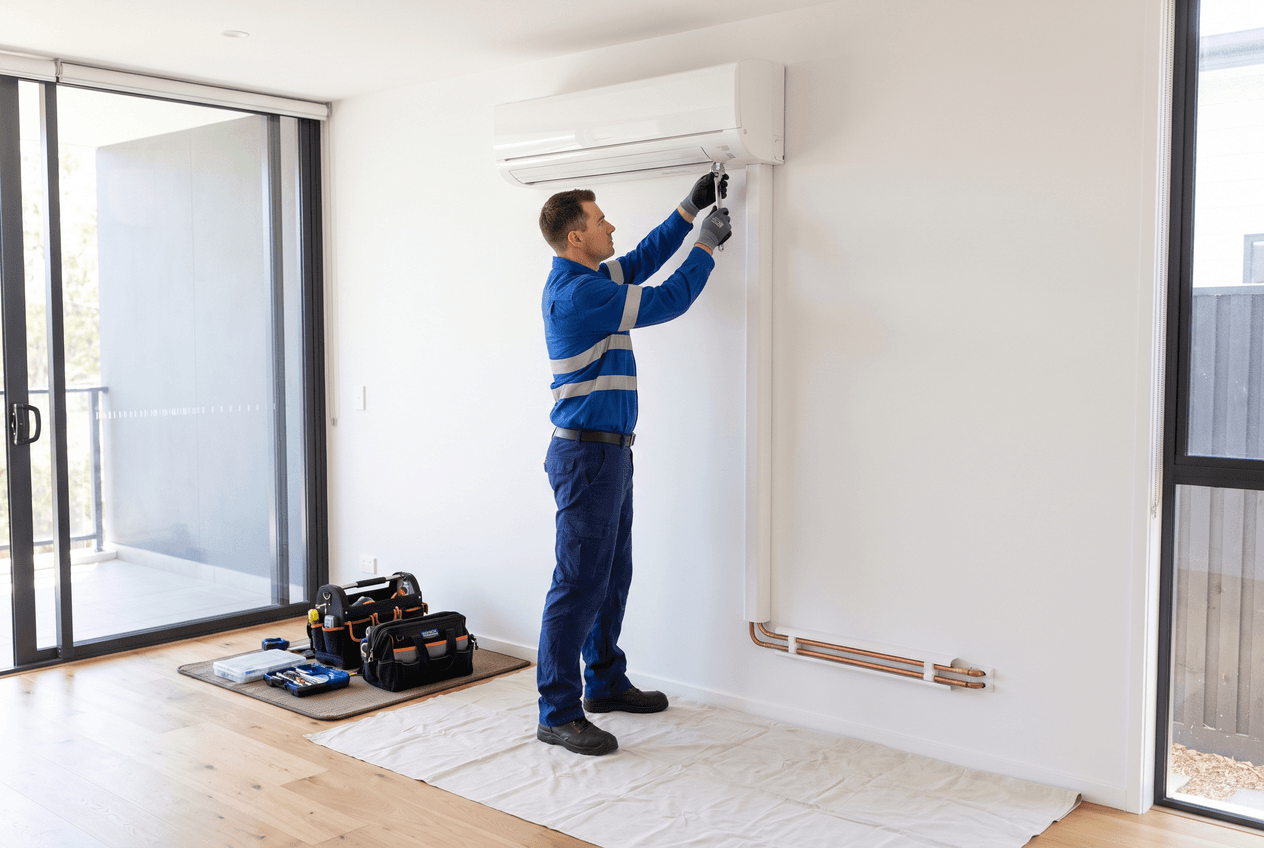
A proper air conditioning installation is a methodical process rather than a quick bolt-on. An installer sizes the system to the space, mounts the indoor and outdoor units in the right spots, connects them with insulated refrigerant pipework, a condensate drain and electrical cabling, then commissions the finished system so it runs safely and efficiently from the first day.
It is also licensed work. Handling the refrigerant that makes the system work requires an ARCtick licence, and the job has to meet the relevant Australian standards, so it is not something to attempt yourself. Getting the install right is what decides how well the system cools, how efficient it is to run, and how long it lasts in Brisbane's climate.
How a split system is installed, step by step
A standard split system, the most common choice in Brisbane homes, is installed in a clear sequence. Here is what a qualified installer works through on the day.
- Assess and size the system: the installer checks the room size, ceiling height, insulation, orientation and how the space is used, confirms the system is correctly sized, and agrees where the indoor and outdoor units will go.
- Position and mount the units: the indoor head is fixed to a mounting plate on an internal wall, and the outdoor unit is set on a level bracket or pad in a well-ventilated spot that is easy to service.
- Run the pipework, drain and cabling: insulated refrigerant pipes, a condensate drain and interconnecting cabling are run between the two units, usually through a small hole in the wall, and sealed neatly.
- Make the electrical connection: the units are wired together and connected to the power supply by appropriately qualified people, with any new dedicated circuit at the switchboard carried out by a licensed electrician.
- Vacuum, charge and commission: the pipework is vacuum-tested to remove air and moisture, the refrigerant is set to the correct charge, and the installer runs the system to confirm it cools, heats and holds temperature before handover.
How ducted installation is different
A ducted system follows the same core steps but is a bigger job. The central indoor unit is installed in the roof cavity, and a network of insulated ducts carries conditioned air to discreet vents in each room, with motorised dampers letting the home be zoned.
Because of the ductwork and the number of outlets, a ducted installation usually takes longer and is best planned early, whether for a new build or a retrofit. The outdoor condenser is still positioned for airflow and easy servicing, and smart controllers such as iZone, MyAir or AirTouch are set up so you can run only the zones you need.
How long does an air conditioning installation take
A straightforward split system installed near a suitable power supply is often completed in a few hours. A more involved split, a multi-split running several indoor heads, or a job that needs longer pipe runs will take longer.
A ducted system is typically a full day or more, depending on the size of the home, the number of zones and whether it is a new build or a retrofit. Your installer can give you a clear idea of timing once they have assessed the site.
Why installation is licensed work, not a DIY job
It is tempting to see a split system as a simple wall-mounted appliance, but installing one correctly is skilled, licensed work. The refrigerant is handled under an ARCtick licence, the installation has to meet Australian standards, and the electrical connection has to be made safely.
A poor install causes real problems: refrigerant leaks, weak cooling, water damage from a badly run drain, a voided manufacturer warranty, and higher running costs. Airspect installs to the required standards and holds the licences the work calls for, including ARCtick licence AU42469 and QBCC licence 1313788. Our technicians and contractors are qualified, vetted and inducted into Airspect's processes.
Getting ready for your installation day
There is a little you can do to help the day run smoothly, none of which involves touching the system itself.
- Clear access to where the indoor and outdoor units will go, both inside and out.
- Think about where you want the indoor head, balancing airflow across the room with a tidy look.
- Make sure the installer can reach the switchboard and any existing isolator.
- Keep pets secured and move fragile items away from the work areas.
Choosing the right installer in Brisbane
The quality of an installation matters as much as the brand on the wall. Correct sizing, neat pipework, a properly tested charge and a tidy electrical connection are what separate a system that runs efficiently for years from one that struggles and fails early.
Airspect installs residential systems from manufacturers including Mitsubishi Electric, Daikin, Fujitsu and Panasonic, chosen for efficiency and reliability in Australian conditions. We assess your home before recommending anything, then give you honest advice and a clear, fixed-price quote. We have installed and serviced air conditioning across Brisbane and South East Queensland since 2007, so the same team that sizes and fits your system can look after it for the long haul.
Once you know that installing air conditioning is a planned, licensed process, the value of getting it done properly is clear: the right size, a careful install and a proper commissioning are what keep a system comfortable, efficient and reliable. If you are ready to book an installation, or just want a straight answer about what suits your home, our Brisbane team is happy to help.